To encourage and guide people in the process of creating bird friendly habitat on their own property, Wake Audubon is offering a Bird Friendly Habitat Certification Program.
The goal of the program is to educate and encourage neighbors to create bird friendly communities that provide food and water, shelter, and safe spaces where birds and wildlife may thrive.
There are two levels of certification:
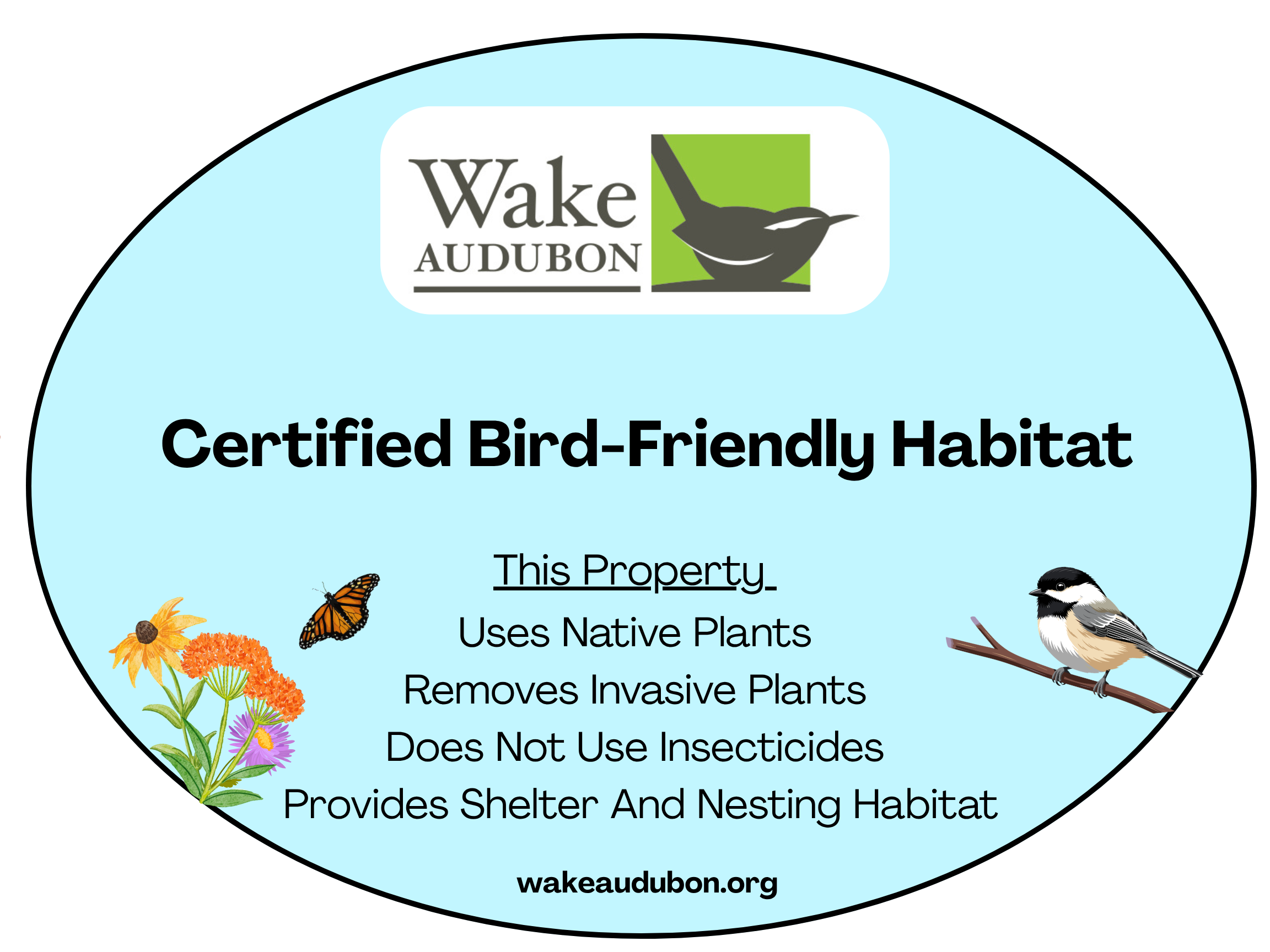
Certified
- Property has at least 30% coverage of native plants including keystone species and the property owner plans to add native species as the size of the property permits.
- Severe and significant threat invasive plants do not cover more than 15% of property and the property owner has plans to control/remove them.
- All vegetative layers are present or planned (canopy trees, understory trees, shrubs, herbaceous perennials including vines and ground cover).
- Leaves are left on the ground year-round where possible.
- Mosquito sprays, rodenticides, and systemic insecticides are not used and use herbicide responsibly by minimizing the use of ant and roach baits and sprays, foundation spraying, etc.
- At least 4 other wildlife habitat improvements are present.
- No cats or cats kept indoors and in outdoor enclosures such as catios.
- Windows protected with a method to reduce bird-window collisions.
- Outdoor security lighting either on motion sensors or turned off when not needed – not left on all night.
- Variety of nectar and host plants blooming throughout the growing season to support pollinators.
- Pollinator and beneficial insect nesting habitats such as: snags, nurse logs, 1' to 2' of pithy stems left in garden during clean-up, and a spot of bare ground for native bee nests.
- Lawn area with non-native turfgrass reduced to minimum needed.
- Having a pond or well-maintained bird bath for water source.
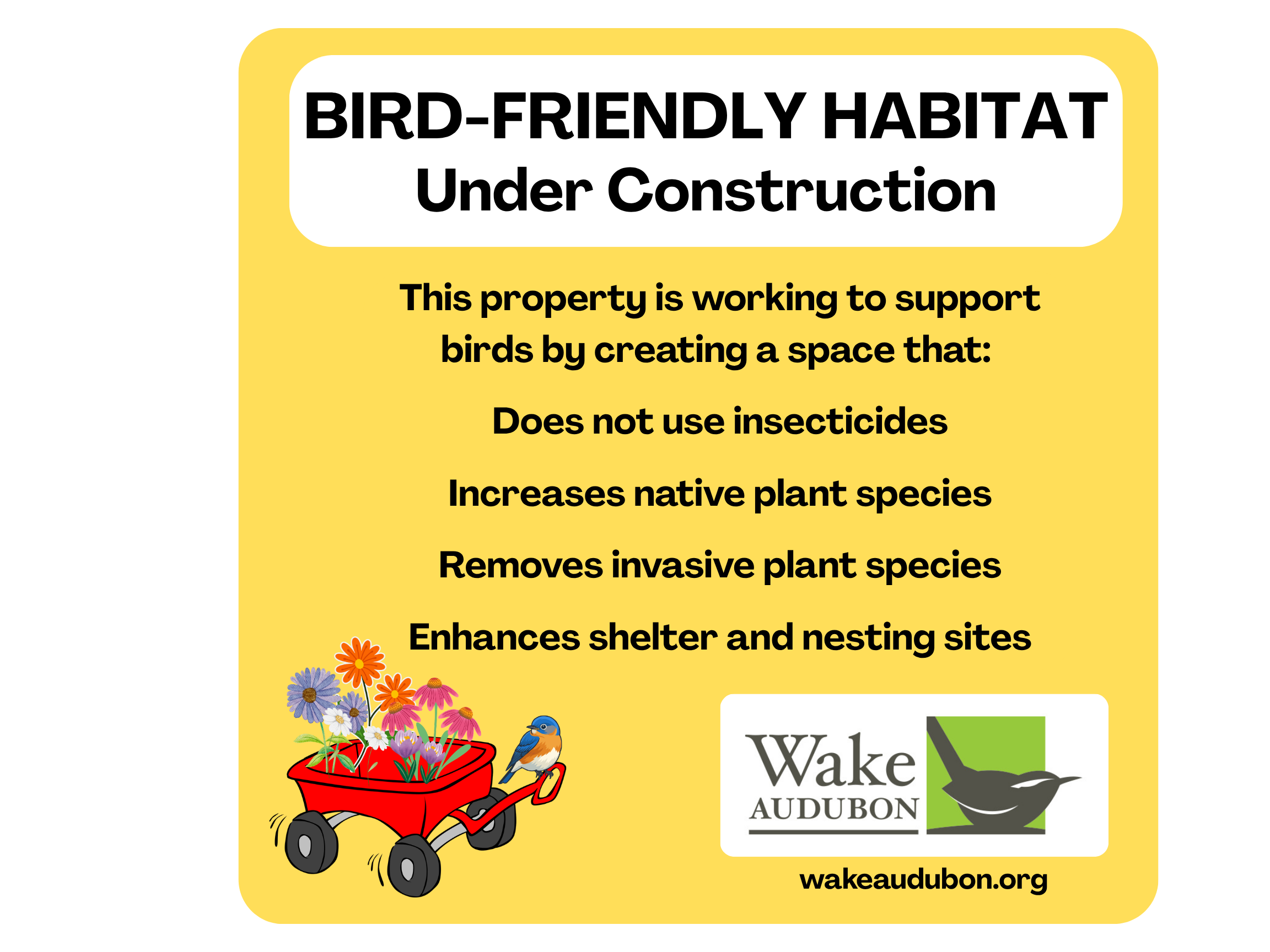
Under Construction
- Property does not qualify for certification.
- Property owner plans to add enough native plants and to remove enough invasive plants to achieve certification.
- All vegetative layers including canopy trees, understory trees, shrubs, herbaceous perennials including vines and ground cover are present or are in the planning stage as the size of property permits.
- Leaves are left at the ground layer year-round where possible.
- Mosquito sprays, rodenticides, and systemic insecticides like neonicotinoids are not used. Other pesticides are minimized.
- At least two other wildlife habitat improvements are present.
Ready to Get Started?
If you are interested in becoming certified, please submit the following online form. There is a fee of $50 for the visit to your yard.
Important Notes
Property visits occur between May and November when we can identify the plants on your property. However, you can apply for a yard visit anytime and we will process in the order of your date of application. We will acknowledge receipt of your application, but please remember there may be a delay if requested in the off-season as we will have a backlog of properties to start visiting in the spring.
Also note that we cover all of Wake County and parts of Johnston, Franklin, Nash, and Harnett counties. As we are starting the program, please be patient with us in scheduling a site visit and depending on where you live, having our volunteers available to visit your property. You can also help us grow our team by volunteering here.