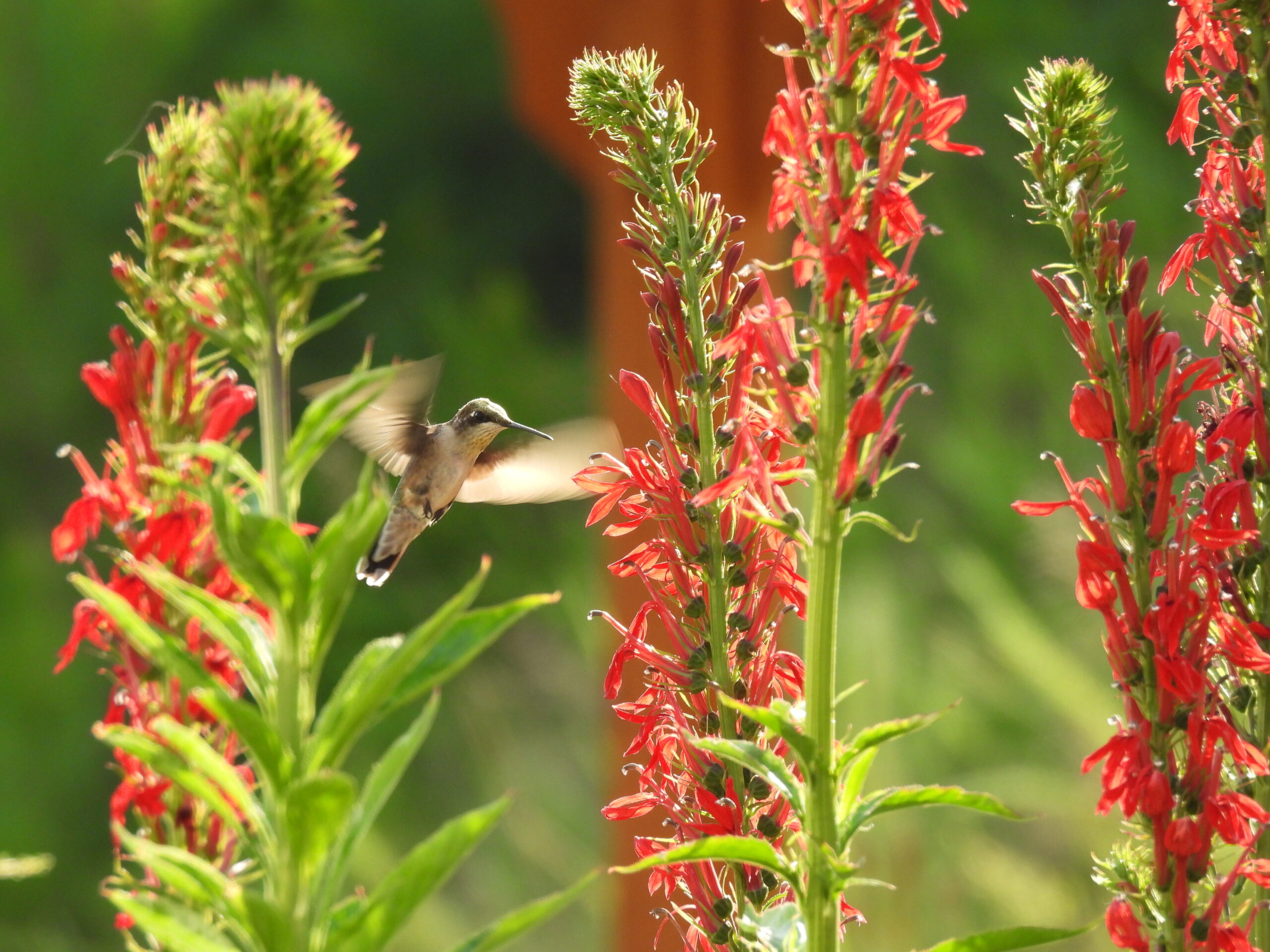
Native plants are those that occur naturally in an area. North Carolina, with its diverse geography, is home to thousands of native plant species! Our natural wildlife – including birds – have adapted to the resources provided by North Carolina’s native plant population. These plants are, in a real sense, home for our birds.
Why natives? In one word: INSECTS. Our local vegetation evolved with insects, birds, and other animals to create complex food webs. Almost all land birds require large numbers of insects to feed their young. Studies have shown that Carolina chickadees need 6,000 to 9,000 caterpillars in a season to raise a brood of five chickadees. Even seed-eating birds often must feed their babies insects to ensure their survival. Insects play many important roles in nature, from pollinating plants to digesting plant and animal waste. Insect populations have dropped at alarming rates in many places around the world. This is in part due to non-native plant introductions as well as pesticide use on farms, in our yards, and agricultural practices that leave insects with little habitat. Fewer native plants means fewer insects, which in turn means fewer bird babies growing to adulthood. Native plants, especially some tree species like oaks, are also host to a large variety of insects, which are then eaten by birds and other animals. Young nestlings, in particular, must consume large numbers of insects in their first weeks of life. Wildlife also consumes native plant fruits, nuts, and seeds for sustenance, while helping to propagate the regional vegetation.
Non-native vegetation can provide some fruits, nuts, and seeds, but it does not host the insects that are vital to birds and the web of life. As their seeds are spread by wildlife, many non-native plants become “invasive” by out-competing local vegetation and disrupting the local ecology.
Native Plant Recommendations
Wake Audubon recommends native plants for birds and pollinators. Find bird friendly native plants for your area at the National Audubon Society’s Plants for Birds website. The North Carolina Native Plant Society also maintains a list of Recommended Native Plants.
Every spring and fall, Field to Cottage Nursery offers native perennials, shrubs, and trees at a 10% discount to current Wake Audubon members. Field to Cottage Nursery is a small, chemical-free greenhouse and nursery operation in northern Wake County.
Plants native to our area are adapted to the soil and climate conditions of the area. However, it is important to pick the right native plants for the variety of micro-climates on your property. If possible, choose plants that bloom at different times of the growing season to support pollinators. The North Carolina Extension Gardener Plant Toolbox can provide detailed information for plant species that you are interested in on growing conditions, wildlife benefits, and a host of other information like resistance to challenges like deer, drought, flooding, etc.
Keystone Plants
Keystone species hold an ecosystem together. Dr. Douglas Tallamy, a renowned entomologist and conservationist, uses the keystone species concept to highlight the plants that support the most wildlife. He and his lab at University of Delaware found that just 14% of plants host 90% of the caterpillars that birds feed to their young. So we strongly encourage you to plant some keystone species like oaks, willows, and goldenrods in your yard. Since trees have the most biomass, we suggest that you consider planting those first. North American Keystone Plants allows you to enter your zip code to find keystone species for your area.
Dr. Tallamy also co-founded Homegrown National Park to encourage people to plant native species. This movement and website is another great resource for getting started.
Diversity is the key for choosing plants, including keystone species, to provide all of the necessary vegetative layers and having blooms throughout the growing season to provide pollen and nectar for the pollinators.
Wake Audubon Suggestions
- Native Plant Nurseries – North Carolina Native Plant Society
- Neonicotinoids in your garden
- Pollinators and other beneficial insect nesting and overwintering habits
- Plant no invasive plants that are on the NC Invasive Plant Council Shun list
- What are Cultivars and Do I Want Them? – North Carolina Native Plant Society