


Striking In Stripes: The Winter World of the Black-and-white Warbler
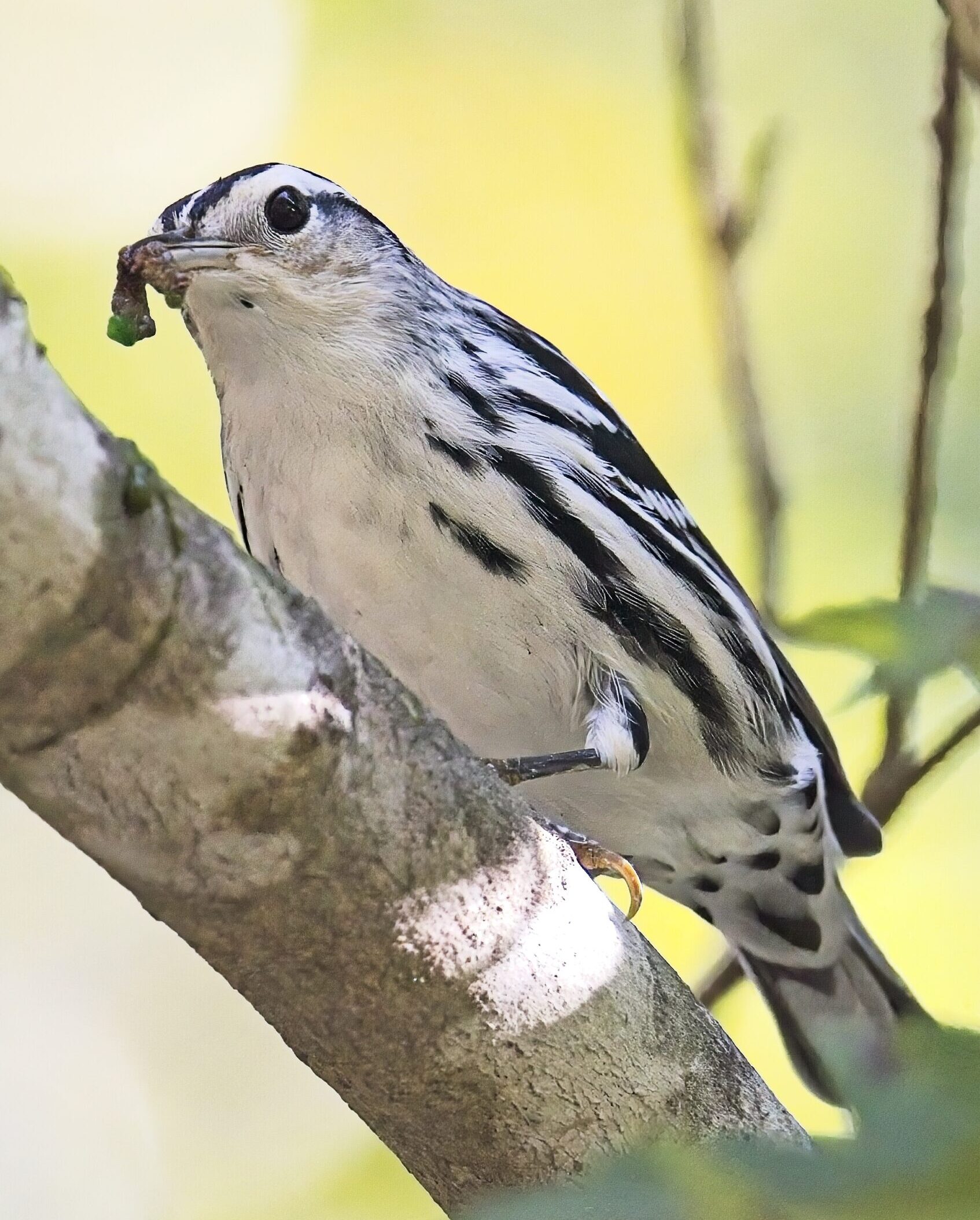
Almost comically cute in their striking striped suits, the Black-and-white Warbler is the first of our four Birds of the Year to claim our monthly spotlight.
If we were spotting a Black-and-white in person this time of year, then we’d almost certainly be somewhere warm and sunny, but could we be anywhere across a wide range of tropical habitats. These Nearctic-Neotropical little birds – meaning they breed in the northern part of the Western Hemisphere (“nearctic”) and winter in the American tropics (“neotropical”) – spend spring through late summer in territories as far west as Texas, east across the southeast and midwest, up through New England and the upper Great Lakes, and throughout most of eastern and central Canada. But when the weather turns chilly and we wait out the winter, these warblers enjoy the warmth of southern and Gulf states – including a tiny stretch of North Carolina’s southernmost coast – from Florida and the Caribbean, through Mexico and Central America, and into northern South America. In this swath of the winter tropics, we could find our warblers across an astonishing mosaic of landscapes. Mangrove swamps and coastal lowlands to dry forest, rainforest, cloud forest, forest edges, and even shade-coffee plantations* and gardens. Anywhere trees offer bark to climb and insects to probe.
Black-and-white Warblers are almost entirely insect eaters, whether they are on their breeding grounds or far to the south for the winter. In spring and summer, they rely heavily on caterpillars and other soft-bodied larvae, along with a mix of beetles, ants, flies, spiders, and other small arthropods pried from bark and branches. When they move to their winter territories, their menu looks much the same: beetles, caterpillars, ants, and spiders gleaned from a broad array of tropical and subtropical forests. Unlike some other Neotropical migrants whose winter diets rely considerably on fruits and seeds, there is only limited evidence Black-and-white Warblers supplement with some fruit while in their winter homes.
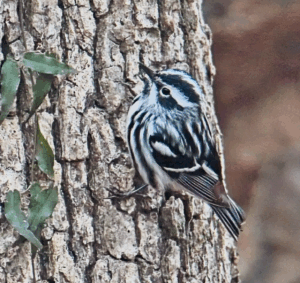
Rather than flitting through leaves, the Black-and-white creeps along trunks and larger limbs, working its way up, down, and even along the undersides of branches, probing into cracks, lichens, and moss for hidden prey. This foraging technique is very much like nuthatches, or so much like creepers that the Black-and-white Warbler was once even known as the “Black-and-white Creeper.” All About Birds offers this helpful distinction:
“Unlike Brown Creepers, which tend to move up a tree as they feed, or nuthatches, which typically move downward, this warbler moves in every direction.” Sturdy legs, a slightly downcurved bill, and an extra-long hind claw help it cling to bark.
Another behavior that sets this warbler apart is its surprisingly combative streak. Black-and-white Warblers will chase and quarrel with other small birds that stray into their space, including chickadees, nuthatches, and even other warblers, and this territorial zeal continues on their wintering grounds, where they defend feeding areas and may drive away their own kind when foraging in mixed flocks.
Next month, as our days grow warmer and brighter and the first spring migrants return, we’ll learn how to identify Black-and-white Warblers by sight or sound. And also learn about their breeding behaviors as they raise their broods in our broadleaf forests.
When we learned about Ruby-throated Hummingbirds in 2024, we explored the significance of shade-grown coffee plantations for birds, especially Neotropical migrants, like Black-and-white Warblers, who winter in these habitats. Here is an excerpt from our November 2024 blog about shade-grown coffee:
The best alternative to sun-grown coffee is shade-grown coffee, meaning the coffee trees grow under the canopy of native trees and among native plants. The Smithsonian Migratory Bird Center has been a longtime champion of shade-grown coffee because of the many ecological benefits. Their work finds: “[S]hade coffee trees provide extensive habitat, oftentimes in regions wracked by forest destruction and other landscape transformations harmful to natural ecosystems. The forest-like conditions of these systems allow for a wealth of ecological dynamics to occur, including increased bird habitat, soil protection/erosion control, carbon sequestration, natural pest control and improved pollination, making such systems vital for conservation initiatives.” Research suggests that bird-friendly shade coffee farms can attract a greater density of migratory birds than even primary forest and the birds there show better body conditions than birds in other habitats, which is “likely a result of the availability of more small-fruited plants useful to birds, as well as flowers that attract insects, offering birds a buffet of resources.”
In order to encourage shade-grown coffee, the Smithsonian created the Bird Friendly coffee program which certifies coffee producers meeting rigorous habitat and conservation standards, and helps consumers identify bird-friendly coffee with the Bird Friendly logo. For bird enthusiasts who also love their coffee it’s a win-win because the Smithsonian coffee experts also say “shade-grown coffees taste better, because the beans ripen slower than coffee grown in the full sun, resulting in a richer, more complex flavor.” To buy Bird Friendly coffee, look for the logo, or visit the Smithsonian’s website where you can find local retailers (including some in the Triangle!) as well as online purveyors.
Blog post written by Wake Audubon volunteer, Brittany Richards
All photo credits: Robert Oberfelder