


Springtime Gold: Meet the Prothonotary Warbler
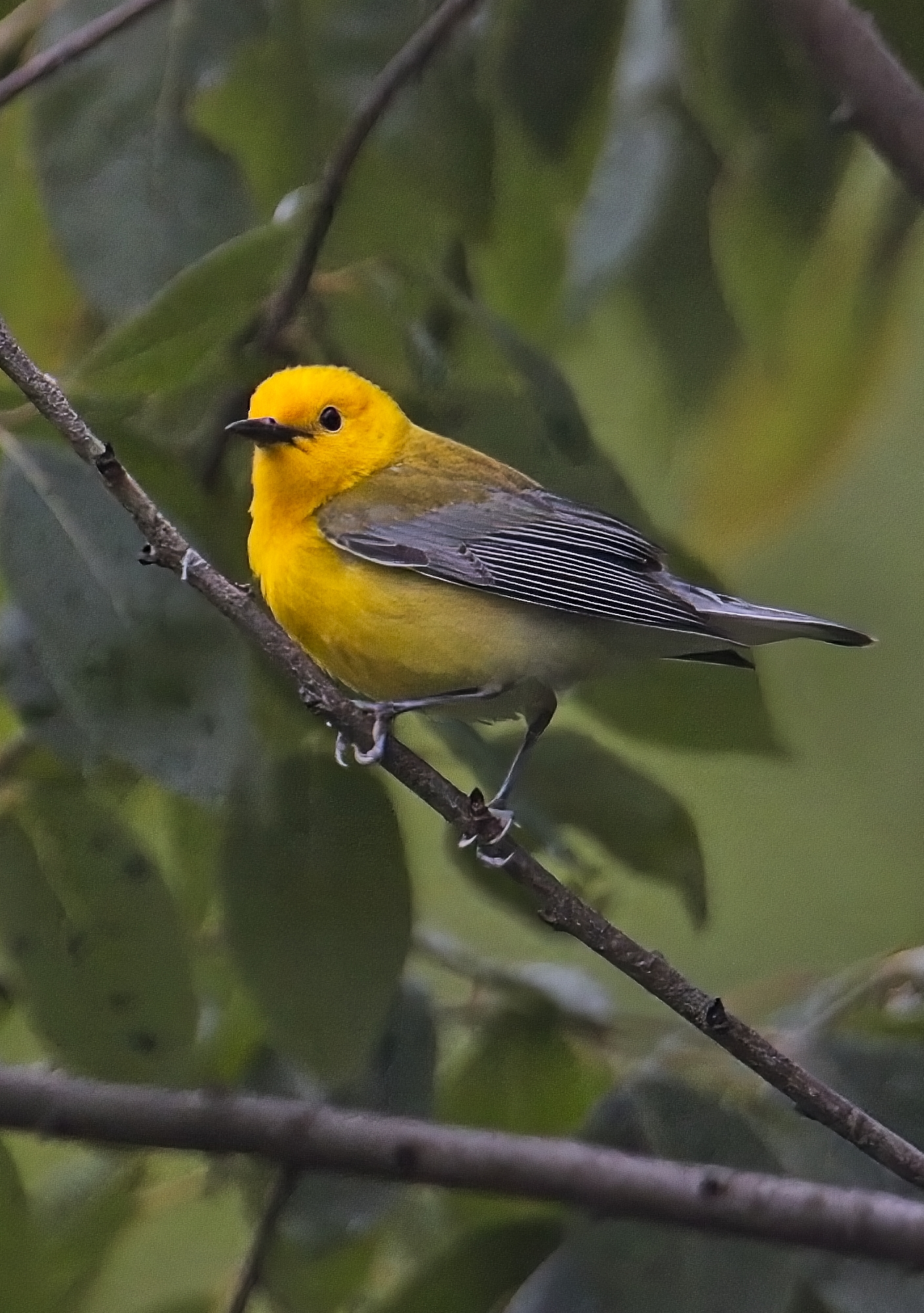
Fuchsia redbud branches. Buttery tulip cups. Snowy cherry trees. Golden Prothonotary Warblers. Our next Bird of the Month adds a vivid new hue to the spring palette.
Only ever so slightly duller in the winter, the Prothonotary Warbler arrives already adorned in its sunny suit in North Carolina in April. Flying north from their southern range along the Gulf Coast, the Yucatán, Central America, and northern South America, Prothonotaries trade in their winter mangroves for summer swamps across the eastern and central U.S. Unlike our earlier Bird of the Month, the Black-and-white Warbler, which favors the western parts of our state, Prothonotaries are most often found in the Piedmont and eastward, along creeks and rivers and in flooded forests and wooded swamps, habitats defined by slow-moving or standing water. At one time, Prothonotaries were aptly known as “Golden Swamp Warblers.”
While they eat fruits and seeds in the nonbreeding season, with the plentiful invertebrate buffet on offer in spring and summer they eat insects of all sorts, as well as the snails and mollusks available near their watery homes. Their earliest European name nods to their seasonally frugivorous diet. In 1779, the French naturalist Georges-Louis Leclerc, Comte de Buffon, described the species from a Louisiana specimen and called it Le figuier protonotaire, or the “prothonotary fig-eater.” “Prothonotary” refers to high-ranking clerks in the Roman Catholic Church known for their bright yellow robes, while “fig-eater” was a label Buffon applied to several songbird species, many of which we now recognize as warblers.
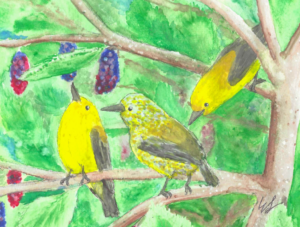
A formal scientific name followed in 1783, when the Dutch naturalist Pieter Boddaert gave Prothonotaries the label Motacilla citrea. “Motacilla” roughly translates from the Latin as “little mover” and came to apply to birds in particular, and “citrea”, also from Latin, means “citrus-colored” or “lemon-yellow.” Early naturalists used Motacilla as a kind of catch-all genus for small, active birds, especially those that flicked their tails, and it is fittingly now the genus name for a group of Old World birds, the wagtails. Today Motacilla citreola is the Citrine Wagtail, a Eurasian species. The Prothonotary Warbler was reassigned to its own genus in 1858 when the American naturalist Spencer Baird placed it in Protonotaria, where it remains the sole member today as Protonotaria citrea, appropriately retaining the species name befitting its bright yellow plumage.
With its unusual name and unmistakable golden color, the Prothonotary Warbler is one of spring’s most distinctive arrivals. With its return to our woods and our waters, we’ll spend the next two months learning more about how it builds its nest and raises its young, how to recognize it in the field, and how it makes its way south again in the fall.
Blog post written by Brittany Richards
Watercolor credit: Evan Landon
Photo credits: Robert Oberfelder