


Hidden in the Leaves: The Ovenbird’s Nesting Story
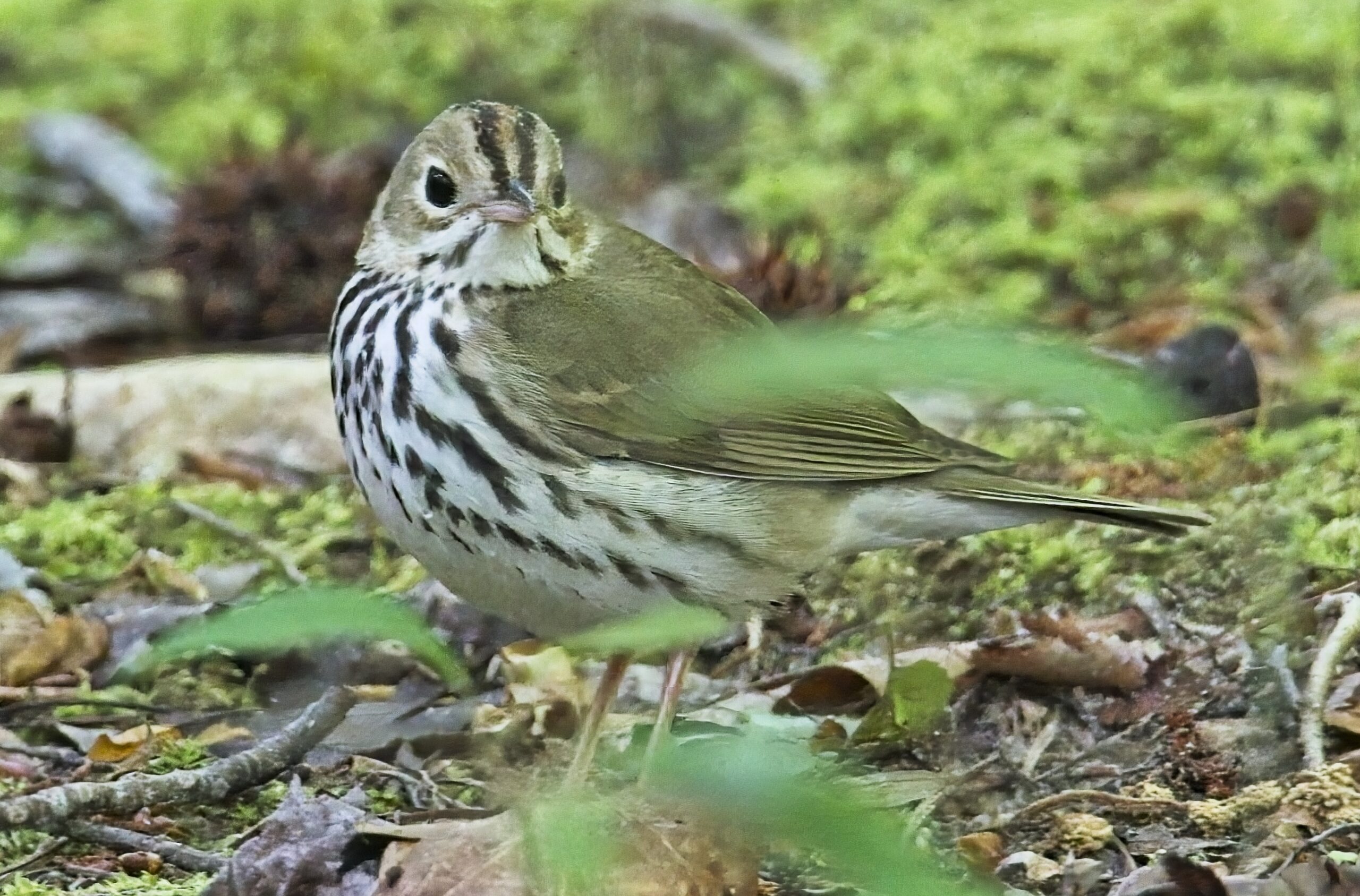
A sculpted dome of grass and twigs, its opening barely perceptible beneath a layer of leaves. A carefully crafted cup, tilted on its side. Too finely formed to be accidental. A burrow? Certainly a comfortable home for some denizen of the forest floor. Five small, speckled eggs nestled inside give it away: this is an Ovenbird nest!
Breeding begins with territory. In late spring, male Ovenbirds claim and defend up to several acres through long, vocal standoffs with rivals. They sing loudly, chasing intruders with aggressive postures, but do not usually come into physical contact. After a territory is secured, a male uses his song to attract a mate, and once paired, the bond lasts only through the nesting season.
While the male will continue to fend off intruders, the work of building the nest falls entirely to the female. She selects a site on the forest floor and begins by clearing a small patch of leaves to create a shallow depression. Over several days, she weaves a domed nest from grasses, stems, bark fibers, and leaves, shaping both the outer shell and inner cup as a single structure. The entrance is tucked to the side and nearly invisible from above. Inside, the cup is lined with fine materials such as deer or horse hair, creating a soft, insulated space for the eggs.
Clutches typically contain three to six eggs, white with reddish-brown speckles, and the pair will usually only have one brood per year. The female alone incubates the eggs for about two weeks, and the male occasionally brings her food. Once the chicks hatch, both parents share feeding duties. They bring a steady supply of insects to the nest, and in the early days, they also consume the chicks’ waste to keep the nest clean. As the young grow, the nest itself begins to change, the domed roof often pushed back and the cup gradually exposed.
After about a week, the young leave the nest one by one, sometimes hours apart. Still unable to fly, they scatter into the surrounding leaf litter, hopping and running as the parents continue to care for them. At this stage, the adults divide the brood. The male keeps some of the young within his territory, while the female often cares for the rest of the brood in a neighboring area. Over the following weeks, the fledglings gain strength, begin to fly, and eventually become independent about a month after hatching. Young Ovenbirds are usually the last to depart in the fall, after the adult males and females have already left separately, and Ovenbirds are believed to be largely solitary outside of the breeding season.
Life on the forest floor comes with risk, and Ovenbirds rely on a variety of techniques to protect their nests. A female will remain motionless as a predator approaches, then flush suddenly and attempt to lure invaders away by pretending to be injured. Both parents may give alarm calls or chase threats within their territory. Even so, many animals prey on eggs and young, including snakes, squirrels, raccoons, and jays, and nests are frequently parasitized by Brown-headed Cowbirds. Ovenbirds do not reliably recognize Cowbirds or their eggs as intruders, and while they may occasionally abandon a nest after a cowbird visit, they usually continue raising their own young alongside the much larger Cowbird chick, and both species of chick often survive.
From first song to fledging, the Ovenbird’s breeding story unfolds on the ground, with its distinctive, oven-shaped nest at the center of it all. Next month, we’ll look at how to find and recognize Ovenbirds, and the challenges and threats facing the species.
Photo credits: Robert Oberfelder
Blog post written by WAS volunteer, Brittany Richards